
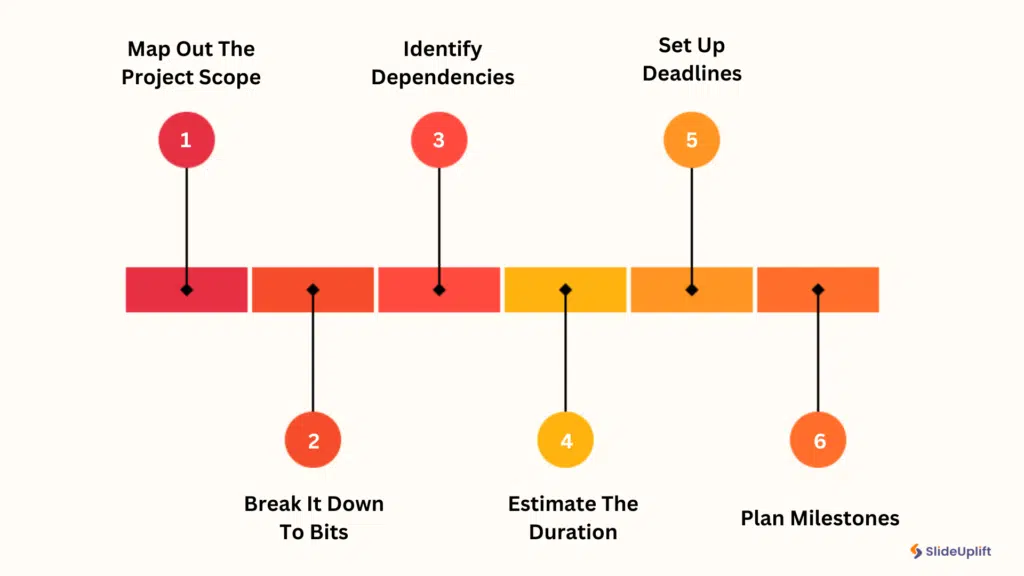
Project planning is one of the most important phases in any workflow, whether you’re managing a business initiative, coordinating a team assignment, launching a new digital product, or organizing personal goals. Yet, planning can quickly become overwhelming when details are scattered across different documents, spreadsheets, and conversations. Deadlines get missed, responsibilities become unclear, and progress becomes difficult to track. This is where visual timelines—also known as project roadmaps, Gantt-style timelines, or chronological project views—make a meaningful difference.
Visual timelines translate complex project information into a clear, intuitive, and visually structured format. They simplify everything from deadlines and deliverables to dependencies and milestones. Instead of reading through lengthy lists or confusing tables, teams can see the entire project laid out in a format that mirrors how we naturally perceive time: from left to right, with clear progression and relationships between tasks.
This article breaks down how visual timelines simplify project planning, the psychological and practical benefits they offer, how teams use them in real-world scenarios, and the future of visual timeline tools.
1. The Power of Visual Thinking in Project Planning
Before exploring timelines themselves, it’s helpful to understand why visualization matters so much.
1.1 Humans Process Visual Information Faster
Research consistently shows that people understand visual information more quickly than text-based information. Our brains are designed to identify patterns, timelines, and sequences when presented visually.
A project timeline uses:
- Lines
- Colors
- Shapes
- Durations
- Arrows
- Milestones
These elements communicate information instantly—information that might otherwise require several pages of text.
1.2 Visuals Reduce Cognitive Load
Long textual project plans demand focus, interpretation, and memorization. A visual timeline reduces cognitive load by allowing users to see:
- What tasks exist
- When they occur
- Who owns them
- How long they will take
- How tasks relate to each other
This reduces stress, confusion, and mental strain. Instead of decoding a plan, a team can immediately understand it.
1.3 Patterns Become Easier to Spot
Only when a plan is visualized do certain patterns become clear:
- Bottlenecks
- Overlapping workloads
- Unrealistic timelines
- Periods of silence or inactivity
- Dependencies that may cause delays
Visual timelines expose these issues early—before they turn into real problems.
2. What Is a Visual Timeline?
A visual timeline is a graphical representation of a project schedule. It displays the sequence of tasks over time in a format that is easy to read and navigate. Common variations include:
- Gantt charts
- Roadmaps
- Horizontal timelines
- Milestone charts
- Kanban-to-timeline hybrid views
- Interactive drag-and-drop timelines
Regardless of style, the core purpose is the same: simplify complexity by organizing everything chronologically.
3. How Visual Timelines Simplify Project Planning
Visual timelines simplify project planning in multiple key ways. Each benefit contributes to improved clarity, alignment, communication, and execution.
3.1 They Provide a Clear Overview of the Entire Project
One of the biggest advantages of a visual timeline is its ability to reveal the entire project at a glance. Instead of flipping through documents or spreadsheets:
- The start and end dates are visible.
- Major milestones stand out clearly.
- All tasks appear in sequence.
- Overlaps are easy to understand.
- Dependencies create a visible chain.
This “big picture” perspective helps teams see how everything fits together, reducing confusion and making planning more intuitive.
3.2 They Turn Complex Task Lists Into Easy-to-Understand Visual Sequences
Traditional task lists show what needs to be done but not how tasks relate over time. A visual timeline converts:
- Bullet points → Flowing sequences
- Subtasks → Blocks of time
- Deadlines → Milestones
- Dependencies → Arrows or connecting lines
This transformation makes planning far more accessible for visual thinkers, collaborators, and team members who prefer structured layouts.
3.3 They Clarify Task Durations and Deadlines
Duration is often one of the most misunderstood elements of planning. When a project is only documented through text, people may not realize:
- How long each task takes
- How long the entire project will run
- Where time constraints may appear
A timeline visually displays duration through the length of each task bar. This clarity reduces time-management mistakes and encourages realistic planning.
3.4 They Reveal Dependencies and Their Impact
Dependencies are one of the biggest reasons projects fall behind. If Task B relies on Task A, delays cascade down the timeline.
Visual timelines clearly illustrate these relationships:
- Arrows point from one task to another
- Connected lines show order
- Delays update automatically in many tools
Seeing dependencies helps teams:
- Adjust resources early
- Avoid unexpected bottlenecks
- Allocate responsibilities more effectively
3.5 They Support Better Resource Allocation
With a visual timeline, managers can quickly see:
- Who is overloaded
- Who has availability
- When certain roles are needed
- Which departments must collaborate
This helps prevent burnout, reduce conflicts, and balance the workload. Without visualization, resource issues remain hidden until they cause delays.
3.6 They Improve Communication and Collaboration
Visual timelines serve as a shared source of truth for everyone involved in a project. Instead of having separate interpretations:
- Stakeholders see the same information
- Team members understand expectations
- Leaders can communicate progress at meetings
- Clients get clear updates
This alignment reduces miscommunication, eliminates guesswork, and strengthens team cooperation.
3.7 They Make Progress Tracking Simple and Transparent
As tasks are completed and updated, the timeline evolves with the project. Progress tracking becomes easier because:
- Completed tasks change color or update visually
- Delayed tasks stand out
- Upcoming tasks remain visible
- Overall project percentage becomes measurable
This creates accountability and allows teams to adjust quickly when circumstances change.
3.8 They Reduce Planning Errors
When planning only with text, it’s easy to overlook:
- Conflicting deadlines
- Unrealistic time expectations
- Missing dependencies
- Overlapping work
Visual timelines make these errors visible immediately. Teams can identify and fix issues early, reducing the risk of late-stage problems.
4. Why People Prefer Visual Timelines Over Traditional Planning Tools
Visual timelines offer advantages that traditional methods like spreadsheets and task lists lack.
4.1 They Feel More Natural
Humans perceive time linearly. Visual timelines mimic this natural perception, making them intuitive even for:
- New team members
- Non-technical stakeholders
- Clients unfamiliar with project tools
People grasp timelines quickly without training.
4.2 They Reduce Information Overload
Instead of reading long emails or documents, visual timelines condense everything into an uncluttered, well-organized format. This reduces mental fatigue and prevents overwhelm.
4.3 They Allow Interactive Adjustments
Modern timeline tools are interactive:
- Drag a task to reschedule it
- Extend or shorten a task block
- Drag arrows to connect dependencies
- Move entire sections as a group
This flexibility makes planning dynamic and efficient.
4.4 They Facilitate Decision Making
Because timelines simplify complex information, they help leaders:
- Evaluate different planning scenarios
- Test alternative timelines
- Anticipate future challenges
- Make informed decisions quickly
Visual data speeds up decision-making significantly.
5. Real-World Use Cases: How Visual Timelines Are Applied
Visual timelines are used across industries and project types.
5.1 Software Development and Product Teams
Teams use timelines for:
- Roadmaps
- Release schedules
- Sprint planning
- Feature development
- Bug triage cycles
- Beta launches
Timelines keep cross-functional teams aligned, from designers to engineers to marketing.
5.2 Marketing and Campaign Planning
Marketers rely on timelines for:
- Content calendars
- Ad campaign schedules
- Social media planning
- Event preparations
- Product launch coordination
Timelines reveal how different marketing phases overlap.
5.3 Construction and Engineering
Complex projects require clear sequencing:
- Procurement
- Site preparation
- Structural phases
- Safety inspections
- Material delivery
- Client handovers
Visual timelines prevent dangerous oversights.
5.4 Education and Academic Projects
Students, teachers, and schools use timelines for:
- Semester planning
- Research projects
- Exam preparation
- Classroom schedules
- Curriculum development
They make long-term planning easy for learners and administrators alike.
5.5 Creative and Design Teams
Creators use timelines for:
- Design sprints
- Film and video production schedules
- Art commissions
- Photography deadlines
These teams benefit from seeing idea development in a clear sequence.
5.6 Personal Projects and Life Planning
Visual timelines help individuals:
- Plan weddings
- Organize home renovations
- Manage fitness schedules
- Prepare for travel
- Track long-term goals
They simplify life planning just as they simplify work.
6. Emotional and Cognitive Benefits of Visual Timelines
Project planning isn’t just a logical task; it also impacts emotions, confidence, and mindset.
6.1 They Reduce Stress
Clarity reduces stress. When a timeline shows everything visually:
- Worries shrink
- Ambiguity disappears
- People know exactly what to expect
Stress often stems from uncertainty, and visual timelines eliminate that uncertainty.
6.2 They Increase Motivation
Seeing visible progress creates momentum. As tasks update and milestones approach, teams feel motivated to keep moving forward.
Motivation increases when progress is easy to see.
6.3 They Improve Accountability
Visual timelines publicly display responsibilities. Team members feel more accountable when their tasks are visible.
When people can see their role in the larger picture, they take more ownership.
6.4 They Enhance Confidence
A visual timeline strengthens confidence by showing:
- A clear plan
- Visible progress
- Achievable milestones
- Predictable outcomes
Teams trust the process more when it is visual and easy to understand.
7. Digital Tools Enhancing Visual Timelines
Modern tools have transformed visual timelines from static charts into interactive, smart planning systems. Many now include features such as:
- Automatic dependency management
- Real-time collaboration
- AI-powered timeline suggestions
- Progress tracking dashboards
- Notifications and reminders
- Resource management tools
- Integration with calendars and task apps
These capabilities make timelines more powerful and easier to use.
8. Future Trends in Visual Timelines
As technology evolves, visual timelines will become even more dynamic and adaptive.
8.1 AI-Generated Timelines
AI will soon analyze:
- Project goals
- Team capacity
- Historical performance
- Deadlines
and automatically generate optimal timelines.
8.2 Predictive Delay Warnings
Timelines will predict potential delays before they happen, based on:
- Workload data
- Past patterns
- Team availability
- Task complexity
This will make planning more proactive.
8.3 Dynamic, Real-Time Timelines
Instead of static outlines, timelines will adapt automatically when:
- Tasks shift
- Team members change roles
- New requirements emerge
Dynamic timelines will reflect reality instantly.
8.4 Cross-App Synchronization
Timelines will sync with:
- Calendars
- Communication apps
- Task managers
- Resource tools
- Documentation systems
This will create unified and seamless project visibility.
8.5 Immersive Visualization
In the future, tools may offer:
- 3D timelines
- VR-based project roadmaps
- Interactive space-time visualizations
These immersive formats will make planning more interactive and insightful.
Conclusion
Visual timelines simplify project planning by transforming complicated information into clear, intuitive, and actionable visuals. They help teams understand the full project at a glance, reduce cognitive load, reveal dependencies, organize timelines, and improve collaboration. Whether used for professional projects, creative work, academic tasks, or personal goals, visual timelines make planning easier, more efficient, and less stressful.
As technology advances—particularly with AI-driven features and real-time synchronization—visual timelines will continue evolving to support smarter, more adaptive, and more intuitive project planning.
Leave a Reply